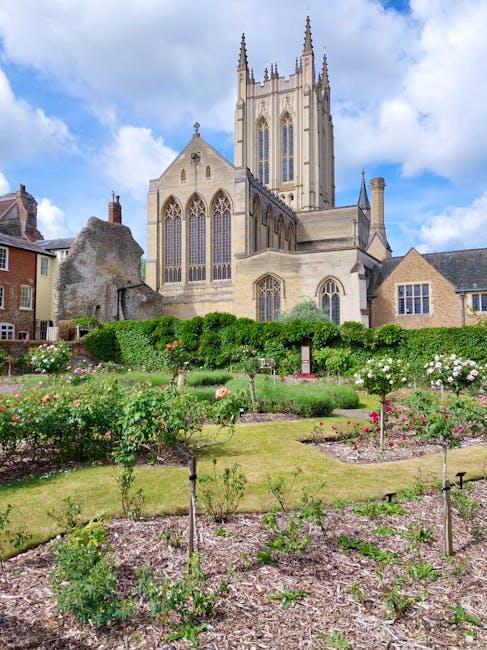
St Pauls Churchyard Garden Care and Lawn Services Blackfriars
If you manage a churchyard, courtyard, communal garden, or a small green space near St Paul's and Blackfriars, the details matter more than most people realise. A tidy lawn is not just about looks. It affects safety, accessibility, first impressions, and how well the space is cared for over time. St Pauls Churchyard Garden Care and Lawn Services Blackfriars brings those moving parts together: regular maintenance, practical lawn care, sensitive pruning, and the kind of routine attention that stops a neglected patch from becoming a bigger problem. Truth be told, a lot of garden issues start quietly.
This guide explains what the service involves, how it typically works, who needs it, and what to look for if you want dependable results in a busy central London setting. You'll also find a checklist, a comparison table, and a realistic example so you can judge what good garden care should look like without the fluff.
Table of Contents
- Why St Pauls Churchyard Garden Care and Lawn Services Blackfriars Matters
- How St Pauls Churchyard Garden Care and Lawn Services Blackfriars Works
- Key Benefits and Practical Advantages
- Who This Is For and When It Makes Sense
- Step-by-Step Guidance
- Expert Tips for Better Results
- Common Mistakes to Avoid
- Tools, Resources and Recommendations
- Law, Compliance, Standards, or Best Practice
- Options, Methods, or Comparison Table
- Case Study or Real-World Example
- Practical Checklist
- Conclusion
- Frequently Asked Questions
Why St Pauls Churchyard Garden Care and Lawn Services Blackfriars Matters
In a central London location, a green space has to do more than survive. It has to cope with foot traffic, shade, dry spells, occasional waterlogging, pollution, compacted soil, and the simple reality that no one has endless time to look after it. That is especially true around St Paul's Churchyard and the wider Blackfriars area, where gardens and lawns often sit beside busy routes, office buildings, historic sites, and communal access points.
Good garden care keeps the space usable. A lawn that is cut too short, for example, can thin out quickly in high-traffic areas. Shrubs that are left unchecked can block sightlines or spill into paths. Fallen leaves, moss, and debris can turn from a minor tidy-up into a slippery nuisance. So yes, appearance matters, but function matters too.
There is also a heritage and respect element. Churchyards and nearby landscaped spaces tend to have a more reflective atmosphere than a standard domestic garden. That means the work needs to be neat, careful, and consistent. Loud shortcuts and heavy-handed treatment rarely fit. A good service understands that balance: enough attention to keep the grounds presentable, not so much intervention that the character of the place disappears.
For busy property managers, trustees, residents' groups, or commercial landlords, this matters because one missed month can create a chain reaction. Grass gets patchy. Weeds creep in. Edges blur. And once a space starts to look tired, it often takes longer to recover than people expect. Let's face it, lawns are a bit dramatic that way.
How St Pauls Churchyard Garden Care and Lawn Services Blackfriars Works
Most garden care programs begin with a site assessment. That means looking at the size of the lawn, the condition of the planting beds, access routes, shaded areas, drainage issues, and how often the space is used. In a place like Blackfriars, access and timing can be just as important as the gardening itself. Early starts, short visit windows, and careful handling of materials are often part of the job.
Once the site has been assessed, the work is usually broken into repeatable tasks. Lawn mowing may be scheduled weekly or fortnightly during the growing season. Hedge trimming and edging might be done less often, depending on growth rates. Seasonal clearance can deal with leaves, cuttings, and any general build-up. If the area has trees, those can affect light, moisture, and the pace at which the lawn recovers.
Professional teams usually work with a maintenance plan rather than a one-off reaction. That might include:
- regular mowing and edging
- strimming around borders, posts, and hard-to-reach spots
- leaf clearance and green waste removal
- checking for bare patches, moss, or overgrowth
- light pruning or hedge trimming where needed
- seasonal tidying to keep the area presentable all year
If the space needs more than routine upkeep, related services may come into play. For instance, overgrown areas may benefit from garden clearance before a maintenance plan starts. If the boundary planting has grown out of shape, hedge trimming can restore order quickly. And if the grass has become uneven or hard to manage, a reliable lawn mowing routine gives the whole space a cleaner finish.
The point is simple: good garden care is not random. It is a sequence. Assess, tidy, maintain, review, repeat. That's the boring version, maybe, but boring is often what keeps outdoor spaces looking calm and cared for.
Key Benefits and Practical Advantages
When a garden or churchyard is maintained properly, the benefits show up in small ways first. Then they spread.
1. Better presentation
Regular care keeps the space looking intentional rather than forgotten. That matters for visitors, residents, congregations, tenants, and anyone passing through. A neat lawn, defined edges, and clear paths say a lot without saying anything at all.
2. Safer access
Overgrown grass, loose cuttings, and blocked walkways can create avoidable hazards. Regular maintenance reduces slips, trip risks, and awkward detours. In a space where older people, families, or visitors with mobility needs may be present, that's a big deal.
3. Healthier planting and turf
Grass tends to recover better when it is cut at the right height and not stressed by infrequent hard cuts. Borders and shrubs also respond better to gentle, regular care than to the occasional rescue mission.
4. Lower long-term stress on the site
Consistent care is usually easier and cheaper to manage than repeated emergency work. A patchy lawn that needs renovation, for example, takes more time than a lawn that was simply maintained well from the start.
5. Clearer budgeting
When maintenance is structured, it is easier to plan visits, track work, and understand where time is going. If you want to see how a provider frames cost and quoting, the pricing and quotes information is a sensible place to start.
Expert summary: the best garden care in central London is not the most aggressive or the most frequent. It is the most consistent, thoughtful, and site-aware. A small space can still be high maintenance if the wrong approach is used, and a larger one can stay tidy if the work is planned properly.
Who This Is For and When It Makes Sense
This kind of service suits a wide range of people, but the common thread is responsibility. Someone has to keep the space in good order, and that someone usually wants the work done without fuss.
It makes sense if you are:
- a churchwarden, trustee, or facilities lead responsible for a churchyard or memorial space
- a landlord or managing agent overseeing shared outdoor areas
- a business owner with frontage planting or a courtyard that sets the tone for visitors
- a resident group looking after a communal lawn or garden
- someone who needs seasonal help because the maintenance load has become too much
It also makes sense when the space starts showing signs that routine DIY work is no longer enough. Maybe the grass is growing unevenly because of shade. Maybe the borders are swallowing the path. Maybe there is a recurring moss issue after wet weather. These are all normal problems, by the way, and they do not mean the garden is beyond help.
A good rule of thumb: if the space needs to look cared for every week, or if it serves the public in some way, regular professional maintenance is often a better fit than occasional catch-up work. Why wait for it to unravel?
If you need broader support beyond grass care, it can help to review the wider services overview so you can match the job to the right kind of work. For more background on the team and approach, the about us page is also useful.
Step-by-Step Guidance
If you are arranging garden care for a site near St Paul's or Blackfriars, the process becomes much easier when you break it into clear steps.
- Walk the site properly. Note access points, high-traffic areas, shade, drainage, and any places that tend to collect litter or leaves.
- Decide what "good" looks like. For example, do you want a neat showpiece, a low-key tidy lawn, or a carefully managed memorial setting? The goal shapes the schedule.
- Separate routine work from one-off work. A lawn may need mowing every one to two weeks, while a one-time clearance might be needed only at the start.
- Plan around seasonal growth. Spring and early summer often need more frequent attention. In autumn, leaf fall changes the workload. Winter is slower, but not irrelevant.
- Agree on waste handling. Clippings, leaves, branches, and general green waste need to be removed or managed in line with the site's preferences.
- Review the first few visits. A good plan often gets refined after the first month. That's normal. Gardens are not spreadsheets.
- Keep a simple record. Even a short log of visits, seasonal issues, and problem areas can help with future planning.
If you are unsure where to begin, the strongest starting point is usually maintenance rather than a one-off cosmetic fix. The reason is simple: once the routine is stable, the rest is easier. For bigger reset jobs, a combination of garden maintenance and targeted clearance can bring a site back into shape without overcomplicating the brief.
One practical note: access and timing can matter more than people expect in central London. A well-run visit that fits around residents, visitors, or business hours is often worth more than a rushed session with no thought for the surroundings.
Expert Tips for Better Results
Keep mowing height sensible. Cutting too low is one of the quickest ways to stress a lawn, especially where shade and foot traffic are already working against it. A slightly higher cut often looks better and lasts longer.
Don't let edges go wild. Grass edges along paths, walls, and borders are small details, but they shape the whole impression. Clean edging makes a space feel cared for even if the planting is modest.
Treat shade as a design constraint, not a failure. Many central London gardens have partial shade from buildings or mature trees. That's normal. The trick is choosing maintenance methods that work with the light available instead of fighting it.
Clear debris before it becomes a layer. Wet leaves, cuttings, and general rubbish can smother grass and create slippery surfaces. A quick visit often beats a heroic rescue later on.
Watch the signs, not just the calendar. Sometimes growth slows; sometimes it races after rain and mild weather. If the lawn is clearly outpacing the schedule, adjust. Simple, really.
Use tree work carefully. Trees can be beautiful assets, but dense canopy cover affects lawn health. If branches are overextended or causing safety concerns, tree lopping and removal may be part of the wider plan. That said, tree work should be considered carefully and only when genuinely needed.
Think in layers. A lawn, a hedge, borders, and any hard landscaping all influence one another. If one part is ignored, the whole area can start to look off-balance.
Common Mistakes to Avoid
Some garden problems happen because the work is poor. Others happen because the work is inconsistent. The difference matters.
- Letting maintenance drift. A missed visit here and there seems harmless until the site needs extra labour to recover.
- Cutting the lawn too short. Short grass is not always neat grass. Sometimes it is just tired grass.
- Ignoring drainage or shade issues. If the site stays damp, has moss, or fails to recover in certain areas, mowing alone will not solve it.
- Assuming every garden needs the same schedule. A churchyard margin, a private lawn, and a busy commercial courtyard do not have identical needs.
- Leaving clearance until it becomes a major job. This usually turns a tidy-up into a bigger, more disruptive visit.
- Overlooking communication. If the team does not know what matters most on-site, they may focus on the wrong detail.
One of the sneakiest mistakes is assuming "it looks okay" means "it is under control." Those are not the same thing. Not even close, to be fair.
Tools, Resources and Recommendations
Good garden care depends on the right tools, but also on using them with restraint. A professional team will typically work with mowers, strimmers, edging tools, pruning equipment, blowers, and waste bags or bins suitable for green waste. For larger or more involved sites, access equipment and collection methods may also matter.
From a site owner's perspective, the most useful "resources" are usually practical rather than technical:
- a site map or simple access plan
- a list of priority areas, such as memorials, entrances, or seating spaces
- a maintenance log for seasonal issues
- clear instructions on what should be removed versus left in place
- any safeguarding or access notes relevant to visitors or occupants
If sustainability is important to your organisation, ask how green waste is handled and whether the service supports recycling-conscious practices. You can review the provider's approach to recycling and sustainability if that is part of your decision-making. In places where waste handling is tightly managed, that small step can make the whole service feel more responsible.
If the job has broader landscaping ambitions, you may also want to compare routine upkeep with more creative or structural work. The difference between landscape gardening and ongoing maintenance is worth understanding early, because it affects cost, timing, and expectations. If you're planning surface changes or outdoor features, landscaping and even decking services can sit alongside garden care when a site needs a fuller refresh.
Law, Compliance, Standards, or Best Practice
For garden care in London, the main thing is not to overstate what the law requires unless you have checked the site-specific details. That said, there are sensible best-practice expectations that matter in a public-facing or managed space.
Health and safety should be built into the job. That means considering trip hazards, debris handling, tool use, public access, and safe working around memorials, walls, planters, and trees. If a contractor is working on a busy site, they should be organised about access and basic site safety. The provider's health and safety policy and insurance and safety information are worth reviewing before work starts.
Waste handling should be clear. Green waste, branches, and general debris should not be left in a way that creates nuisance or risk. If the work involves a larger reset, a proper garden clearance plan can prevent confusion over what gets removed and what stays.
Access and inclusivity matter. In a public or semi-public space, smooth paths and clear routes are part of good care, not an optional extra. If visitors with mobility needs use the space, regular edging and clearance are especially important.
Transparent terms are useful. For scheduled work, cancellation rules, service scope, and payment expectations should be easy to understand. The terms and conditions page helps set that tone, and the payment and security information can be helpful if you are arranging recurring service.
There may also be local expectations about sensitivity, especially in churchyard settings. Even where there is no complicated legal issue, there is still a duty of care in the everyday sense: respect the place, avoid unnecessary disturbance, and leave it tidy. That's the kind of standard people notice.
Options, Methods, or Comparison Table
Choosing the right approach depends on the condition of the space and how it is used. Here's a simple comparison to help you think it through.
| Approach | Best for | Pros | Limitations |
|---|---|---|---|
| One-off tidy-up | Overgrown or neglected spaces that need a reset | Fast improvement, useful starting point | Won't keep the space tidy for long without follow-up |
| Regular garden maintenance | Sites that need consistent presentation | Stable, predictable, usually easier to budget | Needs planning and ongoing visits |
| Lawn-focused service | Areas where the turf is the main feature | Improves appearance quickly, simple to schedule | May not address borders, hedges, or waste build-up |
| Full-site care plan | Churchyards, communal grounds, or complex outdoor spaces | More complete, better for mixed-use sites | Requires clearer brief and coordination |
If you are trying to decide between these, start with the current condition of the site. A patch of lawn with no major issues may only need a mowing schedule. A churchyard with leaves, overgrowth, and hard-to-maintain edges probably needs a wider plan. Simple logic, really.
Case Study or Real-World Example
Imagine a modest churchyard garden near Blackfriars that has been manageable for years, but the last few seasons have pushed it off balance. The lawn is still there, but it is patchy in shaded areas and a bit thick near the edges. Leaves gather around the back boundary in autumn. The access path is okay, but only just. The place still has dignity, yet it looks like it is being stretched.
In that situation, a sensible plan would not start with dramatic redesign. It would begin with a clean assessment, a tidy clearance of built-up debris, careful mowing at the right height, and edged borders to sharpen the shape of the space. If the hedges have started to wander, light trimming would make the whole area feel calmer. If the canopy is too dense, tree work could be reviewed later, but only if needed.
After that first reset, a regular schedule becomes easier. The lawn stays shorter and healthier. The edges are easier to hold. Visitors notice the calm, but they may not know exactly why it feels better. That is usually a good sign. Good garden care should feel almost invisible.
And yes, the odd damp corner still gets shady and stubborn. That's normal. The goal is not perfection. It is control, clarity, and care.
Practical Checklist
Use this checklist before booking or reviewing any service for St Pauls Churchyard Garden Care and Lawn Services Blackfriars:
- Walk the site and identify priority areas
- Decide whether you need a one-off job or regular maintenance
- Check access times, entry points, and any visitor restrictions
- Confirm what should happen to grass cuttings, leaves, and green waste
- List sensitive features such as memorials, borders, or tree roots
- Ask whether mowing, edging, trimming, and clearance are included
- Review health and safety, insurance, and payment details
- Agree how often the space should be visited through the growing season
- Make a note of areas that need monitoring after wet weather or shade
- Set a review date after the first few visits
A tiny bit of preparation saves a lot of back-and-forth later. Honestly, it does.
Conclusion
St Pauls Churchyard Garden Care and Lawn Services Blackfriars is really about keeping a valuable space respectful, usable, and quietly well managed. Whether you are looking after a churchyard, a communal green, or a nearby lawn that carries a lot of foot traffic, the same principles apply: regular attention, careful judgment, and a maintenance plan that fits the site rather than forcing the site to fit the plan.
The best results come from consistency. Not dramatic rescue work. Not guesswork. Just steady, thoughtful care that keeps the grass healthy, the edges clean, and the whole place feeling looked after. That kind of work is easy to overlook when it is done well, which is probably the point.
If you are comparing options, take a moment to review the service structure, safety approach, and pricing information before you commit. A calm, well-run process usually tells you more than a sales pitch ever will.
Get a free quote today and see how much you can save.
And if you are still weighing things up, that is fine too. Good decisions around outdoor spaces tend to pay off quietly, season after season.
Frequently Asked Questions
What does St Pauls Churchyard Garden Care and Lawn Services Blackfriars usually include?
It typically includes routine lawn mowing, edging, light weeding, debris clearance, and seasonal tidying. Depending on the site, it may also include hedge trimming, pruning, and more detailed maintenance.
How often should a churchyard or communal lawn be maintained?
That depends on growth, use, and shade. In the growing season, many spaces benefit from weekly or fortnightly attention. Quiet or slow-growing sites may need less frequent visits, but regular checks still help.
Is lawn mowing enough on its own?
Sometimes, but not always. A lawn can look tidy while the borders, edges, or paths are slipping out of shape. For a more complete result, mowing often works best as part of a wider maintenance plan.
What if the area is overgrown or neglected?
That is usually where a clearance-first approach makes sense. A one-off reset can remove excess growth and debris before regular maintenance begins. It is much easier to maintain a space once it is back under control.
Do shaded churchyard areas need special treatment?
Yes, they often do. Shade can slow growth, encourage moss, and make grass less resilient. A lighter, more careful mowing approach and good debris management can help the area stay healthier.
Can this kind of service help with safety?
Yes. Keeping lawns trimmed, paths clear, and edges tidy reduces common trip and slip risks. In public or semi-public settings, that practical safety benefit is a major part of the job.
How do I know whether I need maintenance or landscaping?
If the space already works and just needs ongoing care, maintenance is usually the right fit. If you want structural changes, new features, or a redesign, then landscaping or landscape gardening may be more appropriate.
What should I ask before booking a provider?
Ask what is included, how often they recommend visits, how green waste is handled, and whether they are insured. It is also sensible to ask about access, timing, and any site-specific sensitivities.
How do pricing and quotes usually work?
Pricing often depends on site size, access, frequency, and the level of work required. A simple lawn visit will usually cost less than a full clearance or multi-task maintenance visit, which is why a tailored quote matters.
Is sustainability relevant in garden care?
Yes, especially in a managed or public-facing site. Waste handling, recycling-conscious practices, and efficient scheduling can all reduce unnecessary impact. It is worth asking how a provider approaches sustainability in day-to-day work.
What if the space includes trees or dense planting?
Then the job may need a broader plan. Trees affect shade, leaf fall, and lawn health, while dense planting can make access and maintenance more complicated. In some cases, tree work or hedge trimming becomes part of the overall solution.
How can I get started if I am not sure what the site needs?
Start with a walk-through and note the obvious pressure points: grass condition, edge definition, debris, access, and any recurring problem areas. From there, a sensible maintenance plan is usually easier to shape than people expect.